
5 Signs Your Nervous System Is Still Responding to NICU Trauma (And How to Find Calm Again)
5 Signs Your Nervous System Is Still Responding to NICU Trauma (And How to Find Calm Again)
You brought your baby home from the NICU, but things feel different.
Maybe you're constantly checking their breathing. Maybe the smallest change in their feeding, temperature, or behavior sends your mind racing. Or perhaps you're exhausted, yet somehow unable to relax when you finally have a moment to yourself.
You might have heard someone describe this as being stuck in fight-or-flight.
It's a catchy phrase, and it certainly captures how overwhelming these experiences can feel. But there's something important I want you to understand about your nervous system.
Your nervous system isn't necessarily stuck. It's been shaped.
And understanding that difference can fundamentally change how you approach healing after the NICU.

Your Nervous System Is Designed to Learn From Experience
Your autonomic nervous system is responsible for many of the processes happening in your body without conscious effort. It helps regulate your heart rate, breathing, digestion, and physiological responses to stress. One of its most important jobs is helping you respond to changing demands in your environment.
When your brain detects potential danger, your sympathetic nervous system helps mobilize your body for action. Heart rate increases, attention narrows, and energy becomes available to respond quickly. This is commonly called the fight-or-flight response.
It's not a mistake in your biology. It's an incredibly sophisticated protective response.
But here's where things become especially relevant for NICU parents.
Your brain and nervous system are constantly learning from experience. Through a process called neuroplasticity, repeated experiences can strengthen patterns of attention, emotional response, and behavior.
And the NICU provides some pretty powerful learning experiences.
Think about what your nervous system was exposed to:
Alarms that sometimes signaled medical emergencies.
Unexpected changes in your baby's condition.
Difficult conversations with medical providers.
The constant uncertainty of whether today would bring progress or another setback.
Having to notice and respond to changes in breathing, feeding, or vital signs.
The experience of having very little control over what happened next.
Your brain was learning something important throughout all of this.
Pay attention. Things can change quickly. Don't miss anything.
And that learning doesn't automatically disappear when you leave the hospital.
Why the NICU Can Shape Your Fight-or-Flight Response
One of the fascinating things about the brain is that it doesn't simply respond to what's happening right now. It also anticipates what might happen next. Neuroscientists call this predictive processing.
Your brain continuously uses previous experiences to make predictions about your environment. When something unexpected happens, it registers a prediction error, meaning the difference between what was expected and what actually occurred.
Imagine you're in the NICU and your baby has been doing well for several days. You begin to relax a little. Maybe you even start thinking about discharge. Then suddenly, there's another desaturation event, a new medical concern, or an unexpected change in the care plan.
Your brain has just received powerful new information. The world is less predictable than you thought.
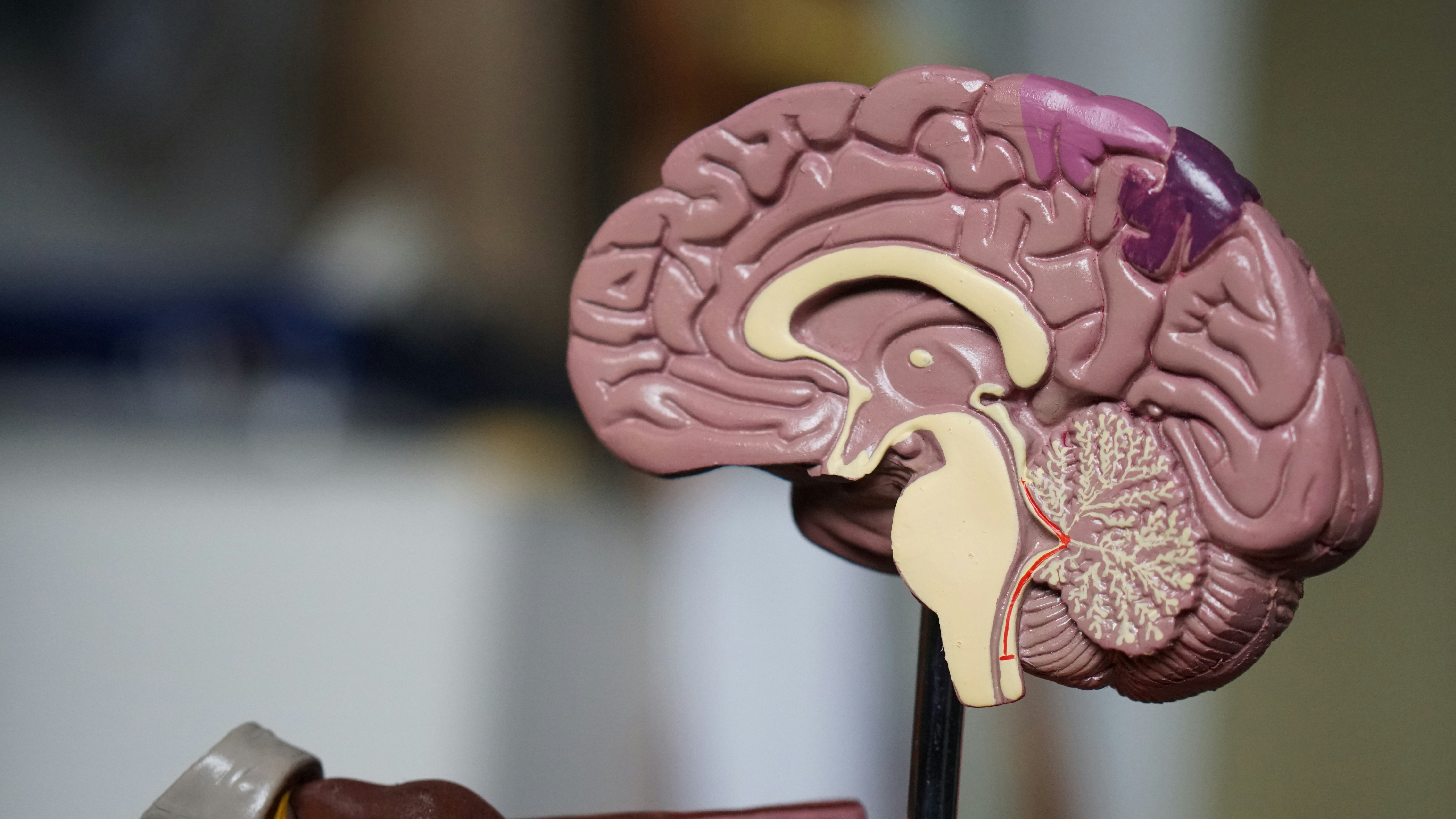
When these experiences happen repeatedly, especially in emotionally intense situations, the brain can become increasingly attentive to signs of potential danger. This is called threat learning. And it helps explain why NICU parents can develop such heightened awareness of their baby's breathing, behavior, and physical condition.
Your nervous system learned that paying attention mattered. The challenge comes when those learned expectations continue to influence your responses, even in situations that are relatively safe.
Let's look at five ways this can show up.
5 Signs Your Nervous System Is Still Responding to NICU Trauma
1. You're Constantly Scanning for Something to Go Wrong
You check your baby's breathing before you fall asleep. Then you check again.
You notice every unusual noise, every change in skin color, every slight difference in feeding.
Even when everything appears fine, your attention keeps returning to the possibility that something might be wrong.
This is called hypervigilance.
During your baby's hospitalization, being attentive to small changes may have helped you communicate important concerns to the medical team. Your brain learned to prioritize that information.
After discharge, however, the same heightened attention can become exhausting. You might find yourself monitoring your baby long after a medical professional has reassured you that things are stable.
It's important to distinguish medically necessary monitoring from trauma-driven checking. Some babies genuinely require continued observation and specialized care.
But when checking becomes repetitive, difficult to control, or disconnected from your baby's current medical needs, it may be a sign that your nervous system is continuing to anticipate danger.
2. Your Body Reacts Before You Have Time to Think
Your phone rings, and your stomach drops. You hear a monitor beep in a television show, and your heart starts racing. Your sounds congested, and you feel an immediate surge of panic. These reactions can happen before you've consciously identified what triggered them.
That's because threat detection involves rapid neural pathways that can initiate physiological responses before deliberate reasoning catches up. Your brain has learned associations between certain sounds, sensations, environments, and experiences. A particular sound may have repeatedly accompanied frightening moments in the NICU.
Now, hearing something similar can activate that learned association.
Your body is responding to a prediction shaped by the past, even though the present situation may be different.
3. You're Exhausted, but Rest Doesn't Feel Restful
This one can be especially confusing.
You desperately want to rest. But when someone offers to watch the baby, you struggle to relax. When the house is quiet, your mind starts racing. When you finally lie down, you feel restless, tense, or strangely uncomfortable. Chronic stress and heightened arousal can interfere with sleep, recovery, and the ability to shift attention away from potential threats.
For some NICU parents, being busy and constantly monitoring became familiar ways of managing uncertainty. When those activities stop, the absence of distraction may make anxious thoughts and uncomfortable sensations more noticeable. Rest itself isn't necessarily dangerous. But your body may need time and supportive experiences to become comfortable with it again.

4. Small Things Feel Much Bigger Than They Used To
Maybe you were once able to handle a chaotic morning, a change of plans, or a difficult conversation without much trouble.
Now, those same experiences can leave you feeling completely overwhelmed.
You might notice:
Increased irritability or frustration.
Difficulty tolerating noise or interruptions.
Feeling emotionally reactive to small changes.
Trouble concentrating or making decisions.
Feeling overwhelmed by everyday responsibilities.
Your nervous system has a limited capacity to respond to competing demands.
When significant energy is already being devoted to monitoring for threats, managing uncertainty, or recovering from disrupted sleep, ordinary challenges may feel more difficult.
And for many NICU families, the stressors don't end at discharge. There may still be specialist appointments, feeding challenges, medications, therapies, and ongoing medical uncertainty. Sometimes your nervous system is responding to past trauma. Sometimes it's responding to very real demands in the present. And often, it's both.
5. You Struggle to Trust Good News
This may be one of the most overlooked signs of NICU trauma because it's not always obvious. The doctor says your baby is doing well. The test results come back normal. Your baby reaches an exciting milestone. But instead of relief, you notice yourself thinking:
➡️ What if something changes?
➡️ What if we're missing something?
➡️ What if this doesn't last?
During the NICU, you may have experienced good news followed by unexpected setbacks. Your brain learned that improvement didn't always guarantee stability. Now, even positive experiences can be accompanied by uncertainty.
This doesn't mean you're pessimistic or incapable of gratitude. It means your brain may still be using previous experiences to anticipate what comes next. And those predictions can change.
How Do You Help a Nervous System That Has Been Shaped by Trauma?

Here's where I want to challenge another common idea. We often hear that we need to reset the nervous system. But your nervous system isn't a computer that needs to be rebooted. It is a living, adaptive system that continues learning throughout your life.
We can never erase what happened in the NICU or eliminate your ability to recognize danger. (Nor would we want to! I mean, it does help keep you alive.) The goal is to develop greater flexibility so your nervous system can respond to what's happening now, rather than relying primarily on what happened before.
This is where nervous system regulation becomes incredibly valuable.
1. Begin by Recognizing Your Patterns
Before trying to change your response, become curious about it.
Notice when you feel activated, overwhelmed, disconnected, or grounded. What was happening around you? What sensations did you notice? What did your mind begin predicting? Learning to recognize these patterns can help you respond more intentionally rather than automatically.
2. Offer Your Body New Experiences of Safety
Your brain learned to anticipate danger through repeated experiences. Which means, it can also learn from new experiences.
This might include:
Taking a slow, comfortable exhale when you notice tension building.
Feeling your feet supported by the floor.
Spending time outside in a calming environment.
Sharing your fears with someone who understands your NICU experience.
Enjoying moments of connection with your baby without pressuring yourself to feel a certain way.
These experiences don't guarantee an immediate sense of calm. But over time, supportive experiences can contribute to new learning.
And importantly, safety isn't something you have to manufacture through positive thinking. (We get told this so often in society.) Rather it means asking for help, getting clear medical guidance, establishing predictable routines, or having someone else share the responsibility of caregiving. These are what help move the needle most.
3. Practice Moving Between States Rather Than Staying Calm All the Time
A regulated nervous system isn't one that never experiences stress. It's one that can adapt to changing circumstances and recover when the demand has passed.
You should be able to feel alert when something requires your attention.
You should be able to mobilize when action is needed.
And when circumstances allow, you should also have access to rest, connection, curiosity, and enjoyment.
These are all indicators for a well-functioning nervous system. For NICU parents, this flexibility may need to be rebuilt gradually. You might begin with thirty seconds of rest rather than expecting yourself to immediately relax for an hour. You might practice noticing one enjoyable moment with your baby without demanding that all your anxiety disappear.
"Calm all the time" is an unrealistic goal.We want to increase your capacity to move through different experiences without remaining dominated by the expectation of danger.
Your Nervous System Was Shaped by the NICU, but It Can Keep Learning
One of the things I wish more NICU parents understood is that the same neuroplasticity that contributes to persistent trauma responses also makes recovery possible. There is hope!
Your brain isn't permanently fixed in the patterns it learned during your baby's hospitalization. It continues responding to new information, relationships, experiences, and environments. And this is why healing after the NICU is about more than telling yourself everything is okay. It's about helping your nervous system recognize the difference between past danger and present circumstances. It's also about rebuilding trust in yourself. And it's about developing the capacity to experience joy alongside uncertainty.
Learning that you can remain attentive to your baby's needs without carrying the entire weight of their safety in your body every moment of the day might sound like a big task now but it's possible to get there. Promise.
Start Understanding Your Nervous System With the NICU Nervous System Ladder
If you recognize yourself in these five signs, one of the most helpful places to begin is understanding your nervous system states.
Inside the NICU Hearts Collective, we've created a Nervous System Ladder specifically for NICU parents.
This resource helps you recognize when your body is experiencing heightened activation, overwhelm, shutdown, or connection, and offers practical ways to support regulation.
Because when you understand what your nervous system is communicating, you can begin responding with curiosity and care instead of frustration or shame. We have a free trial so you've got nothing to lose!
💌[Explore the NICU Hearts Collective and Nervous System Ladder]💌
A Final Thought
The NICU may have taught your nervous system that danger can arrive without warning. It may have shaped the way you sleep, the way you respond to your baby's needs, the way you anticipate the future, and even the way you experience good news.
But that isn't the end of the story.
Your nervous system was designed to adapt.
And that capacity for adaptation is also what makes healing possible.
Your nervous system isn't simply stuck in the past. It's using what it learned in the past to navigate the present. And with support, it can keep learning.